Catch card numbers, IDs and passwords before they reach an AI chat.
DataShield Local checks what you paste, type, send and upload on ChatGPT, Claude, Gemini, Copilot and Gmail, and scans files on your disk. A local model plus checksum rules finds personal data, Indian IDs, payment data and secrets. Nothing you check ever leaves your computer.
See it work
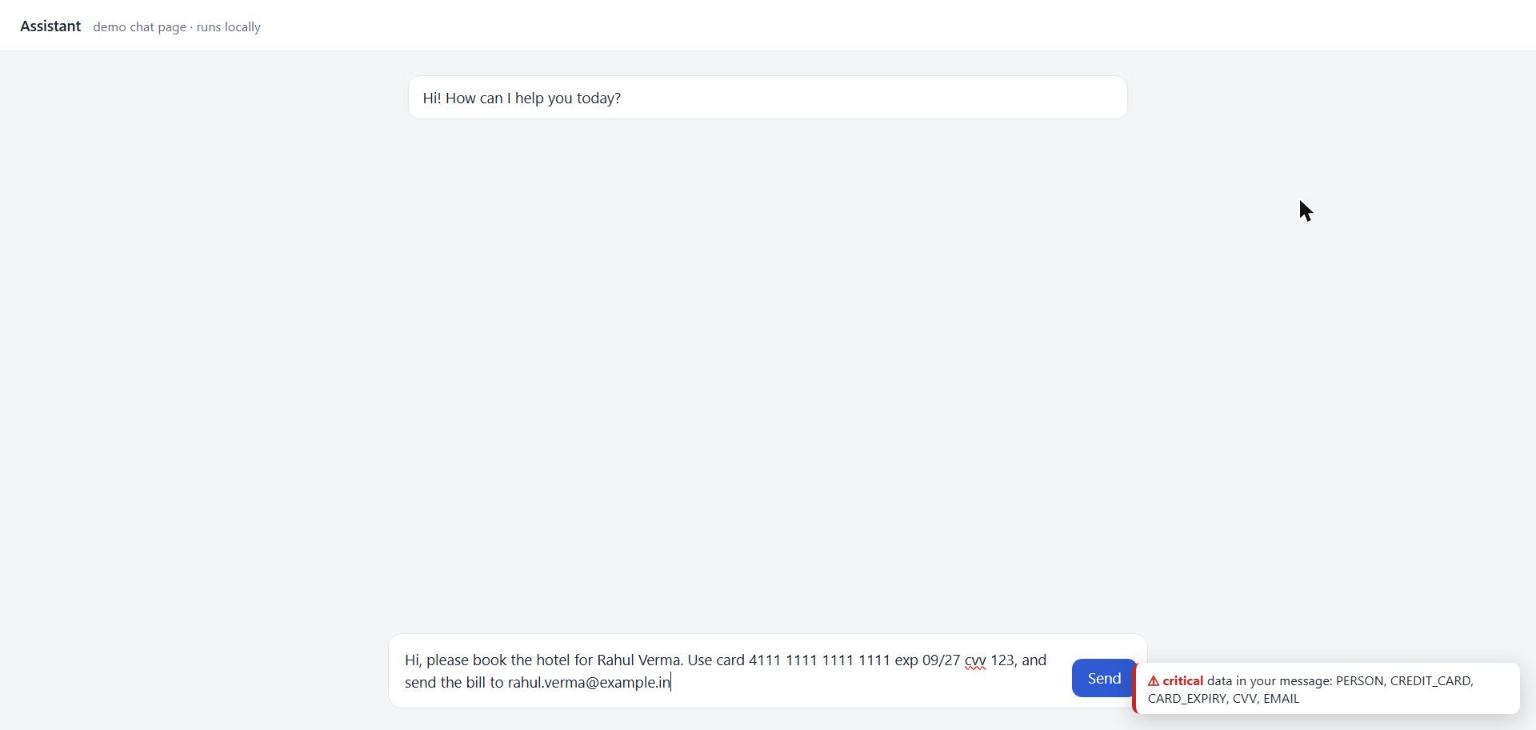
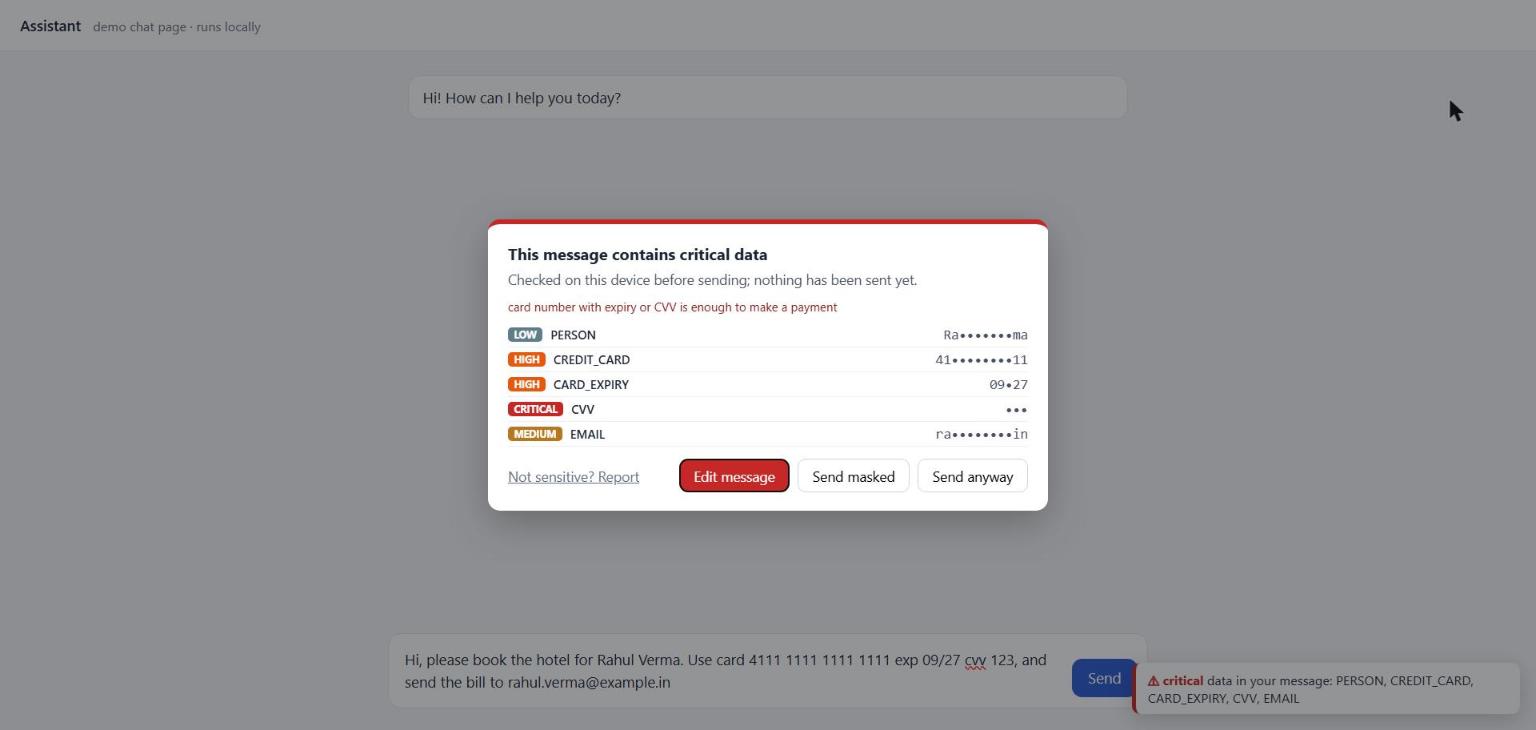
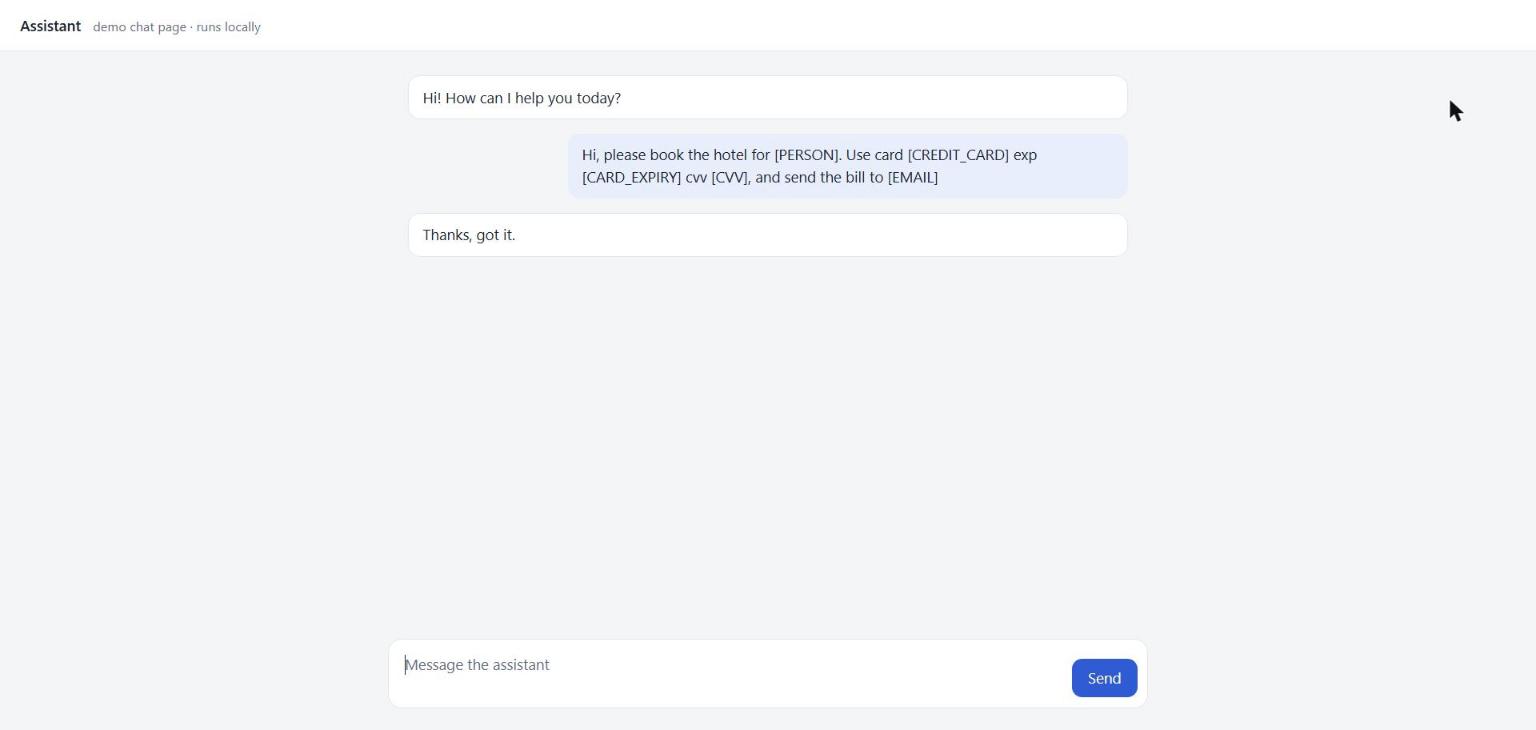
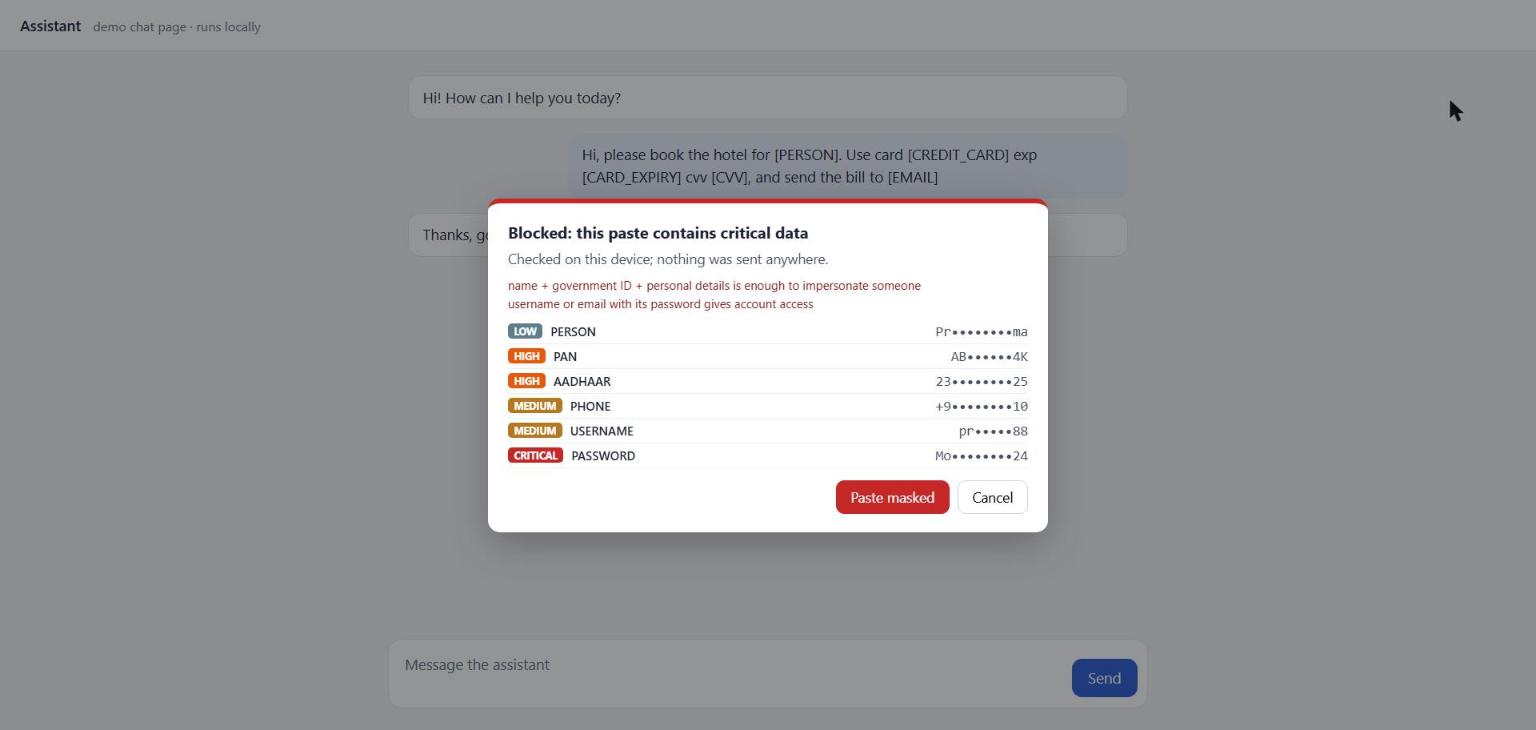
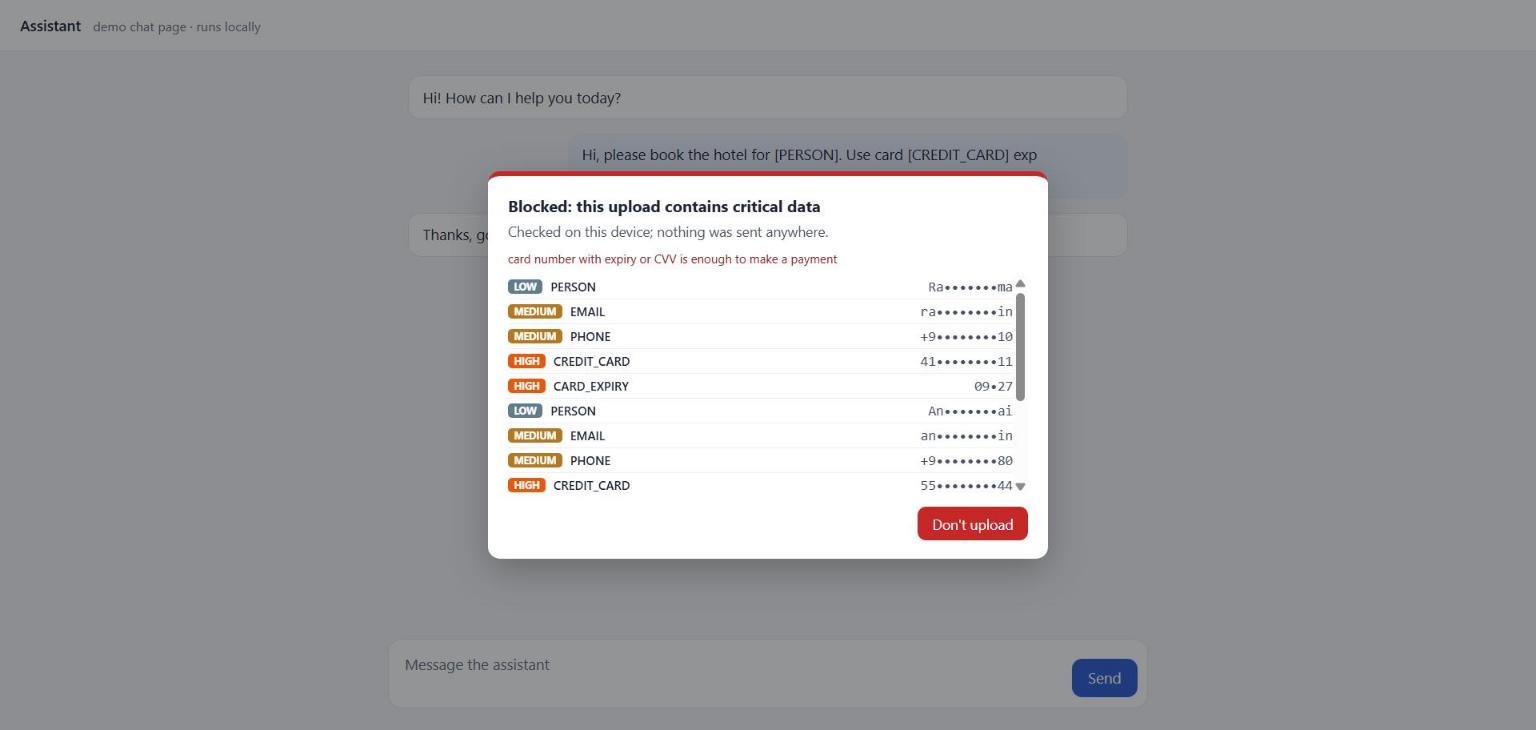
Screenshots from the browser extension on a local demo chat page. All values are made up.

What it finds
20 labels, each with a severity and default action you can change in policy.yaml.
Credentials
Leaked keys are the costliest mistake.
Payments
Card numbers checked with Luhn, IBAN with mod-97.
Indian IDs
Aadhaar verified with the Verhoeff checksum.
Personal
Context-aware, so order numbers and dates of other things are left alone.
How it decides
Findings are weighed together: a card number alone is serious, a card with its CVV is critical.
| Severity | Labels (default policy) | Action |
|---|---|---|
| Critical | CVV, OTP / PIN, password, private key, connection string, API key, auth token | Block |
| High | Card number, card expiry, bank account, Aadhaar, PAN, UPI ID | Mask |
| Medium | Phone, e-mail, address, date of birth, username | Warn |
| Low | Person name, IP address | Allow |
Accuracy
Strict span F1 with the checksum rules, on test sets whose wording was held out from training.
Real-world accuracy is measured on few documents so far; expect it to be lower than the synthetic numbers. Details and limits are in the model card.
Install
- Install the engine and download the model once (about 740 MB, checksum-verified):
pip install "datashield-local @ git+https://github.com/agarje02/data_shield_local"
datashield-local download-model
- Start it. The review app opens at
http://127.0.0.1:8765:datashield-local
- Scan files and folders (text, code, logs, PDF, Word, Excel, e-mail, zip):
datashield-local scan ~/Downloads --html report.html
- Browser extension (Chrome, Edge): run
datashield-local install-native-hostonce, then load theextension/folder from the repo inchrome://extensionswith Developer mode on.
Private by design
Local only
The engine listens on 127.0.0.1. No text, file or finding is sent anywhere.
Locked to you
Programs need a per-user token; web pages and other hosts are refused.
No values in logs
The audit log keeps labels, locations and salted hashes, never the values.
Fails open
If the engine is off, the extension steps aside instead of slowing you down.